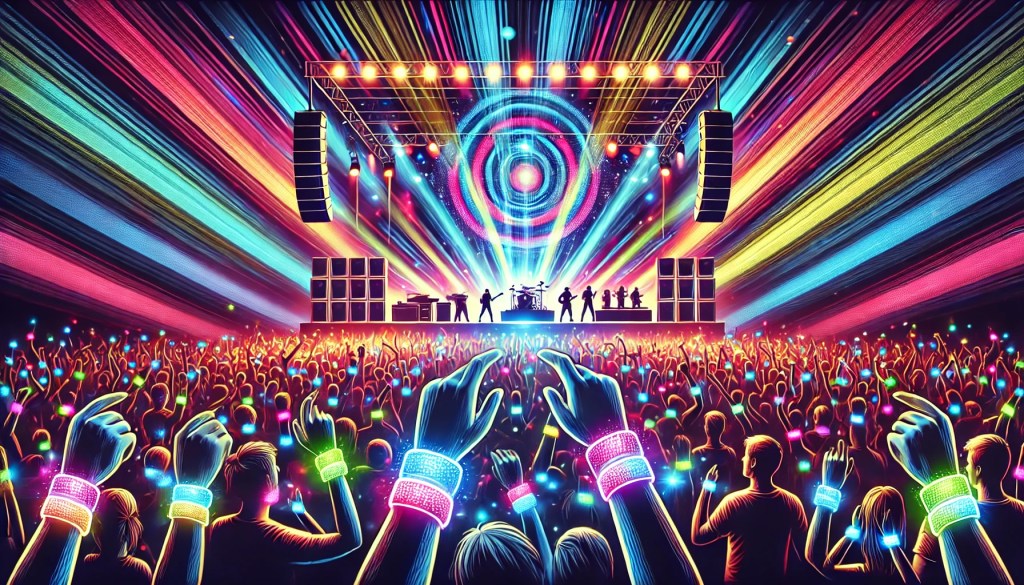
Whatever your opinion of their music, Coldplay has long been recognized for their innovative and engaging live performances. One of their standout features is the use of LED wristbands, which create a mesmerising visual experience for concert-goers. However, watching their spectacular performance at Glastonbury, we thought this technological marvel raises important questions about the environmental impact of live performances.
The LED wristbands, often referred to as “Xylobands,” were first introduced during Coldplay’s Mylo Xyloto Tour in 2012. These wristbands light up in sync with the music, creating a dynamic and immersive light show that enhances the concert experience. The wristbands are controlled remotely and can display a wide range of colours and patterns, transforming the audience into a part of the visual spectacle.
Despite their visual appeal, the widespread use of LED wristbands at concerts raises several environmental concerns:
- Single-Use Plastic: Many LED wristbands are designed for single-use, contributing to plastic waste. Although some versions are collected and reused, not all wristbands make it back for recycling, leading to significant plastic waste after large events.
- Battery Waste: The wristbands are powered by small batteries, which can become an environmental hazard if not disposed of properly. Battery disposal issues include potential soil and water contamination from harmful chemicals.
- Production Footprint: The manufacturing process of these wristbands involves the use of resources and energy, contributing to the overall carbon footprint of producing such items in large quantities.
Coldplay has been vocal about their commitment to sustainability and reducing their environmental impact. For their Music of the Spheres World Tour, the band announced several eco-friendly initiatives, including the use of renewable energy, reducing emissions, and planting trees for each ticket sold.
Regarding the LED wristbands, Coldplay has taken steps to mitigate their environmental impact:
- Recycling Initiatives: The band collects the wristbands after shows to refurbish and reuse them for future performances, thereby reducing waste. According to reports, the return rate of wristbands has been around 80%, which means a significant portion is recycled, but there is still a lot of room for improvement.
- Sustainable Materials: To mitigate the environmental impact of their LED wristbands, Coldplay has initiated the development of wristbands using more sustainable and biodegradable materials. This includes incorporating recycled plastics and biodegradable components to reduce waste.
- Energy Efficiency: Newer wristbands are designed to be more energy-efficient, with longer battery life and lower power consumption.
Coldplay’s initiatives reflect a broader trend in the entertainment industry towards sustainability. Artists and event organisers are increasingly aware of their environmental impact and are adopting practices to reduce their carbon footprint. This includes everything from sustainable merchandise and eco-friendly transportation options to reducing single-use plastics at events. Despite all this, there’s no denying that large-scale touring bands have a huge environmental footprint.
The question remains: can the use of LED wristbands be justified given the potential waste created? While the wristbands contribute to plastic and battery waste, the significant return rate (around 80%) and Coldplay’s efforts to recycle and reuse them perhaps mitigate some of these concerns.
However, there is a continuous need for improvement. Increasing the return rate of wristbands, developing even more sustainable materials, and enhancing the recycling process are crucial steps that could further reduce the environmental footprint of these devices.
Coldplay’s use of LED wristbands represents both the innovative potential and the environmental challenges of modern live performances. While these wristbands create unforgettable experiences, they also highlight the need for sustainable practices in the entertainment industry. Coldplay’s ongoing efforts to minimise the environmental impact of their tours, and in particular to publicly draw attention to their successes and failures, can serve as a model for other artists and events striving to balance spectacle with sustainability.
From a personal perspective, even as an avid lover of live music events, I struggle with the justification of using these spectacular pieces of tech. With a return rate of 80%, that leaves many 1000s needing to be replaced each time, leaving a large footprint behind. I don’t believe that reconciles well with Coldplay’s goals of sustainable touring.
Kickstart your journey into sustainable growth, with all the tools you need to get going at Bright.
Start building your action plan for free, today or try our free Carbon Footprint Calculator
 Bright Sustainability - Blog
Leave a comment